


Auction Lotting Software That Works at the Speed You Walk
Photograph a lot. Speak the description. Tap next. With Bid Lot Wizard, your catalog builds itself as you move through the building and exports, ready to upload when you're done.
Photograph a lot. Speak the description. Tap next. With Bid Lot Wizard, your catalog builds itself as you move through the building and exports, ready to upload when you're done.

Ask most auctioneers how long lotting takes, and you'll get an estimate for the walkthrough. That number is almost always wrong, because the walkthrough is only the first of four separate passes over the same inventory.
You number and photograph on site. You scribble notes on a pad. You get back to the office and rename a folder of photos so the platform will accept them, then type every description into a spreadsheet while squinting at your own handwriting.

Time is rarely lost in one dramatic block. It leaks out of small, repetitive tasks that each feel too minor to fix.
Added together, they account for most of the evening you thought you'd have back. These are the places they hide:
None of that is auctioneering. It's transcription, and it's the part of the job most worth handing to software.
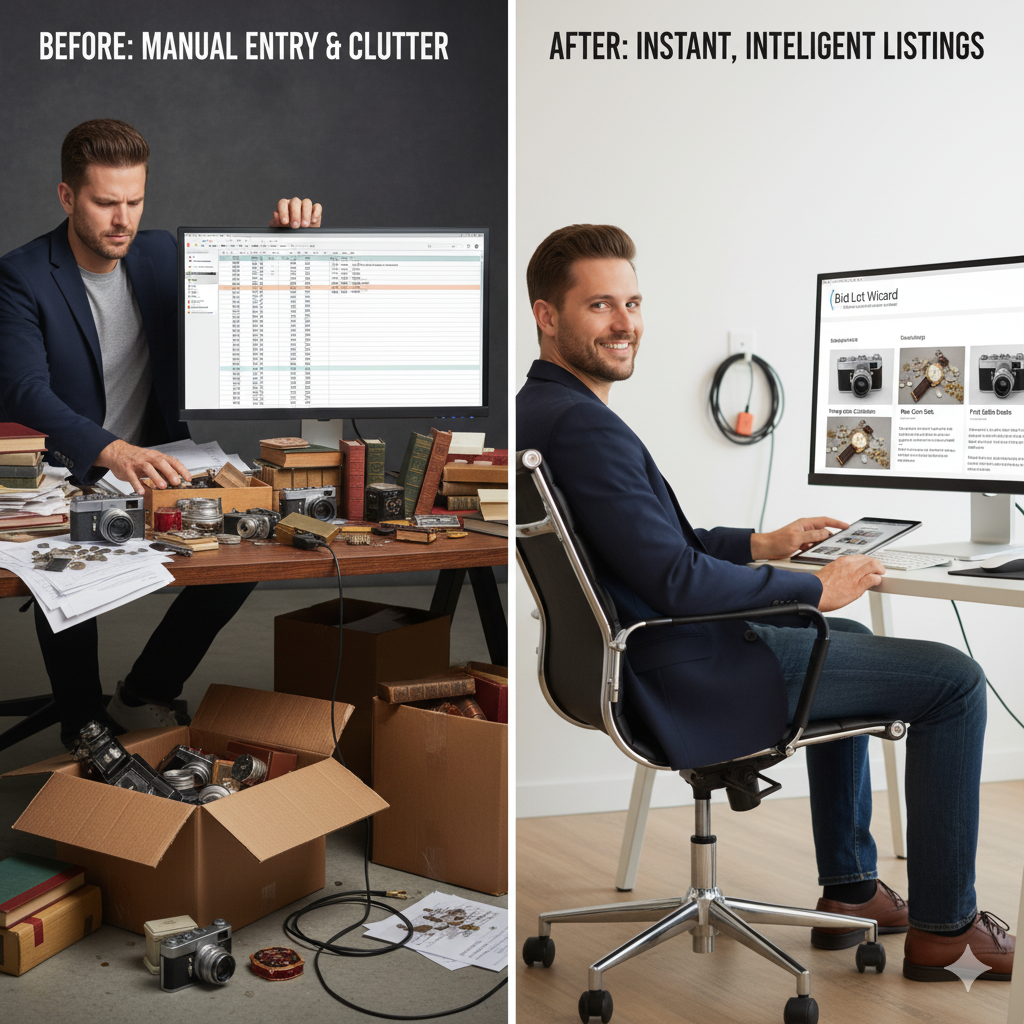
The shift is smaller than people expect. The app doesn't ask you to work differently. It asks you to only work once.
Instead of capturing information roughly and converting it later, you capture it in finished form the first time, standing in front of the item. The description you speak in the client's kitchen is the description that goes live.
That removes the entire back-office stage. There's no evening transcription, because nothing is left to transcribe, and no photo renaming, because the export handles it. Bid Lot Wizard is built to run an auction up to 80% faster than working by hand, and the savings come almost entirely from deleting passes two, three, and four.
The app follows the order you'd work in anyway. No setup project, no data import, no template to configure before your first sale.
You open it, name the auction, and start walking. Here's the whole process, start to finish.
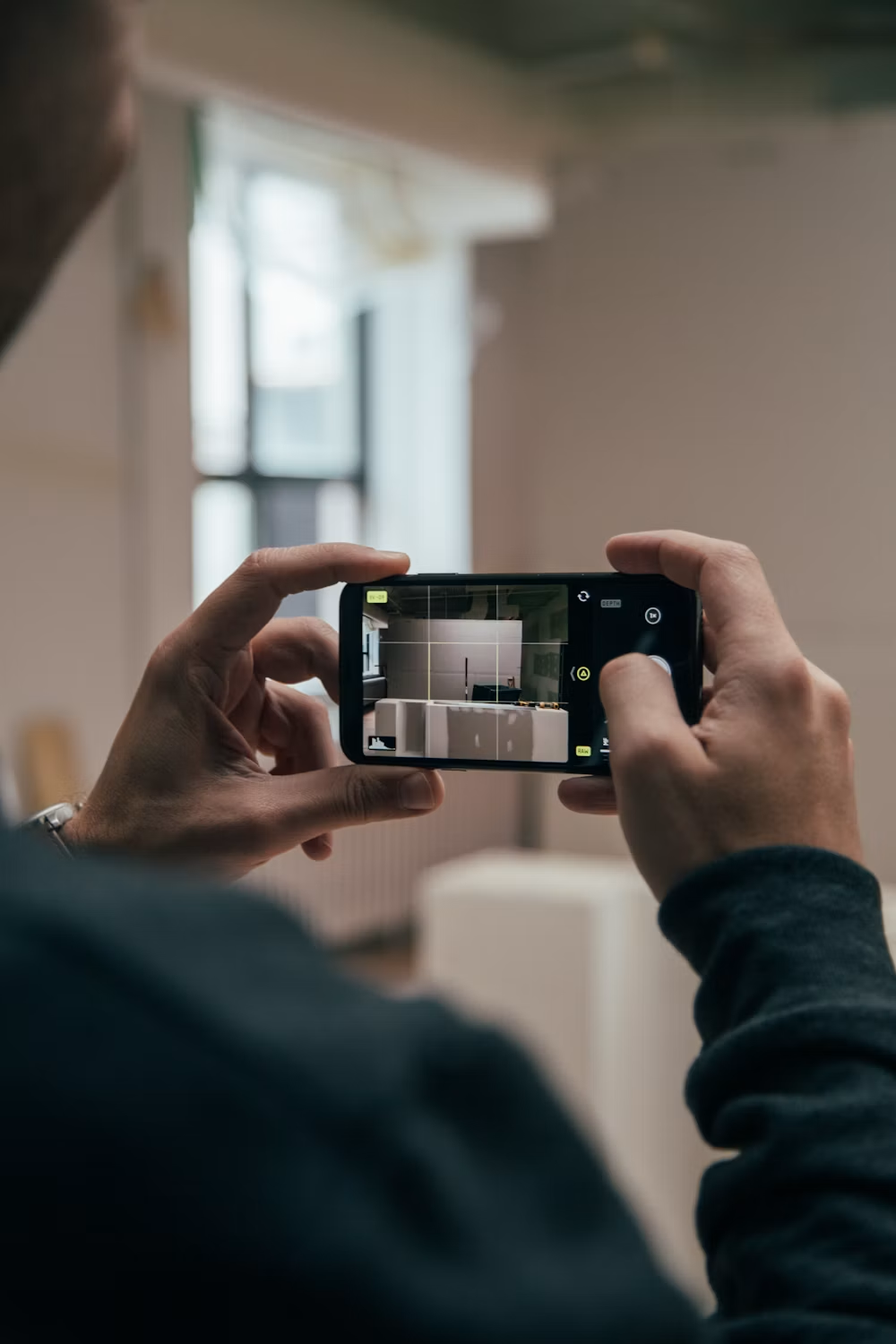
You name the auction and enter the lot number you want to start from. That's the entire configuration step.
Starting from a specific number matters more than it sounds. Auctioneers continue numbering sequences, split large consignments across sales, and reserve low numbers for feature items, and the app counts from wherever you tell it to.

You take as many photos as the lot needs. A box of glassware might take two; a piece of farm equipment might take eight, covering the hour meter, the tires, the serial plate, and the damage you'd rather disclose than argue about later.
There's no cap and no reason to be economical. The photos attach to that lot as a set, rather than piling up as loose files you'll sort out afterwards. Our photo-to-auction listing app walks through this step in detail.
This is the step that does the heavy lifting. You tap the microphone and describe the lot properly, speaking naturally instead of compressing everything into shorthand you'll regret at 9 pm.
Dimensions, condition, maker, provenance, the fact that the drawer runs smoothly and the veneer is original. If you'd rather type, the keyboard is there, and when a lot needs research, you can paste a fuller description straight into the field.

Anyone who has lotted a storage unit or a business liquidation knows the tedium of the twelfth identical chair. The Duplicate button generates the next lot as a copy of the one you just finished.
You adjust what's different and move on. On high-volume sales with a lot of repetition, this is usually where the biggest single block of time comes back.
When the last lot is done, you hit Export. The app generates a .csv file of your catalog and renames every photo to the format an auction platform expects on upload.
You move to your platform, upload the file and the images, and launch. The handoff is the end of your paperwork rather than the beginning of it.
Bid Lot Wizard is a browser-based web app. Nothing to download, no program to install on an office machine, no app store purchase to make.
You log in at bidlotwizard.com on the phone already in your pocket and use the camera and microphone it already has. That matters on site, where the conditions are a cold barn or a half-empty house.
The founder is a licensed Ohio auctioneer who has run his own auction company for fifteen years. He built this after looking at what was available and deciding he didn't want another monthly subscription on top of a stack that was already too deep.
That background shows in the small decisions: the starting lot number, the duplicate function, the assumption that you're working one-handed in a bad light. It's also why the pricing is one flat yearly charge instead of a meter that runs every month.
Because there's nothing to install, there's nothing to roll out. Any phone with a browser can reach the app, so you aren't maintaining software across a row of company devices or paying per seat to add a hand for the week.
The workflow is short enough to hand over without a training session: photograph, describe, next. On a large consignment with more than one person working the room, that's the difference between a catalog that reads consistently and one written in three different styles.

This is a cataloging tool, not an auction platform. It doesn't host your sale, take bids, or handle buyer payments.
It prepares your catalog and hands it to whichever platform you already sell on. Your photos, descriptions, recordings, and exported files remain yours throughout, and you can take them anywhere.
Getting started takes minutes rather than an onboarding process. There's no installation, no configuration, and nothing for anyone's IT person to approve, because the whole thing runs in a browser.
The practical checklist is short, and you almost certainly have all of it already. Here's what's genuinely required:
Auction lotting software earns its keep fastest where volume is high, and the items are varied enough that generic descriptions won't do.
In practice, that covers most of what a general auction house handles week to week:

Pricing is a single flat yearly charge of $497 for 365 days. That covers full access to every feature, unlimited usage, priority support, and any updates released while your subscription is active.
There are no per-lot fees and no tiers to compare, so lotting a 900-lot estate sale costs exactly what lotting a 90-lot consignment costs. Full terms are on the pricing page.
Before you pay anything, there's a free two-week trial covering up to 100 lots, which is enough to run a real sale rather than click around a demo. The trial requires a card and converts to the annual plan automatically after fourteen days unless you cancel, so put the end date in your calendar on day one.
Start Your Free 2-Week Trial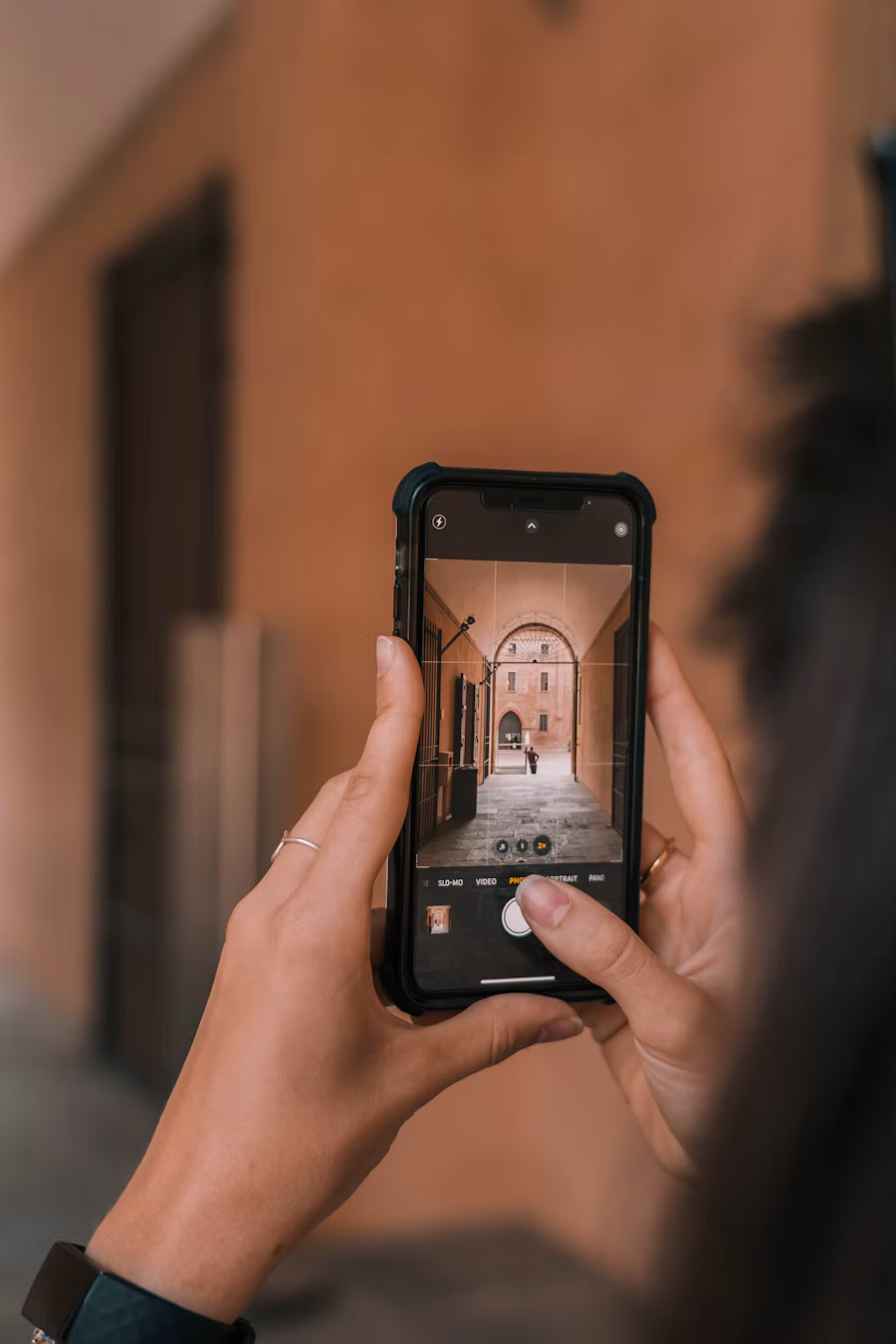

Yes. The app is browser-based and runs on the phone you already carry, using its camera and microphone. There's nothing to download or install. You log in at bidlotwizard.com, name your auction, and start photographing and describing lots straight away.
You export it. The app produces a .csv file containing your lot data and renames every photo to the format auction platforms expect for upload. You then upload both to the platform you sell on. The exported files belong to you.
Two weeks of access and up to 100 lots, enough to catalog a genuine sale rather than test it abstractly. A credit card is required to start. If you don't cancel before the fourteenth day, the trial converts to the $497 annual plan automatically.
No. Bid Lot Wizard handles cataloging only. It doesn't host auctions, accept bids, or process buyer payments. It sits in front of whatever platform you already use, preparing the catalog and handing over a clean, upload-ready export.
The fairest test of any auction lotting software is a real consignment, not a demo. Take the trial to your next walkthrough and list up to 100 items the way you normally would, minus the notepad and the evening at the keyboard.
If you'd rather talk to someone first, the line is answered by people who run auctions themselves. Call 440-454-1121, Monday to Saturday, 9:00 am to 6:00 pm, or email support@bidlotwizard.com.
©2026 Bid Lot Wizard. All Rights Reserved. Designed and Developed by Ogrelogic.

Have an account? Login
Join us and start your journey today!
Your account has been created. Welcome aboard!